I haven’t tried every backpack on the market (fortunately), but with years of hiking experience I have learned what features are important to have in a hiking backpack. At least for me.
As for the most of the things in life, I’ve learned that the best hiking backpack isn’t necessarily the most expensive one. Quality is important, but the way how it fits you and your needs is the most important.
If you’re wondering how to choose a hiking backpack, these are the things I personally pay attention to before buying one.
Why choosing the right backpack matters
When you’re only walking from your car to the office, almost any backpack will do.
A hiking trail is different.
Even a short day hike means carrying water, food, an extra layer, a first aid kit and a few small essentials for several hours. If your backpack doesn’t fit well, you’ll notice it long before you reach the viewpoint.
The wrong backpack can leave your shoulders sore, make your back sweaty, or constantly shift as you walk. On the other hand, the right one almost disappears – you stop thinking about it and simply enjoy the hike.
That’s exactly what I look for.
I always think about how I actually hike
One mistake I see beginners make is buying a backpack for imaginary adventures.
It’s easy to convince yourself you’ll soon be hiking all weekend or trekking through the Alps. But if most of your hikes are easy day trips, buying a huge technical backpack probably isn’t necessary.
I always ask myself one simple question:
What kind of hikes do I actually do most often?
For me, the answer is usually day hikes with my dog, so I don’t need a 40-litre backpack full of features I’ll rarely use.
Buying gear for your real adventures – not your dream / future ones – usually leads to better decisions.
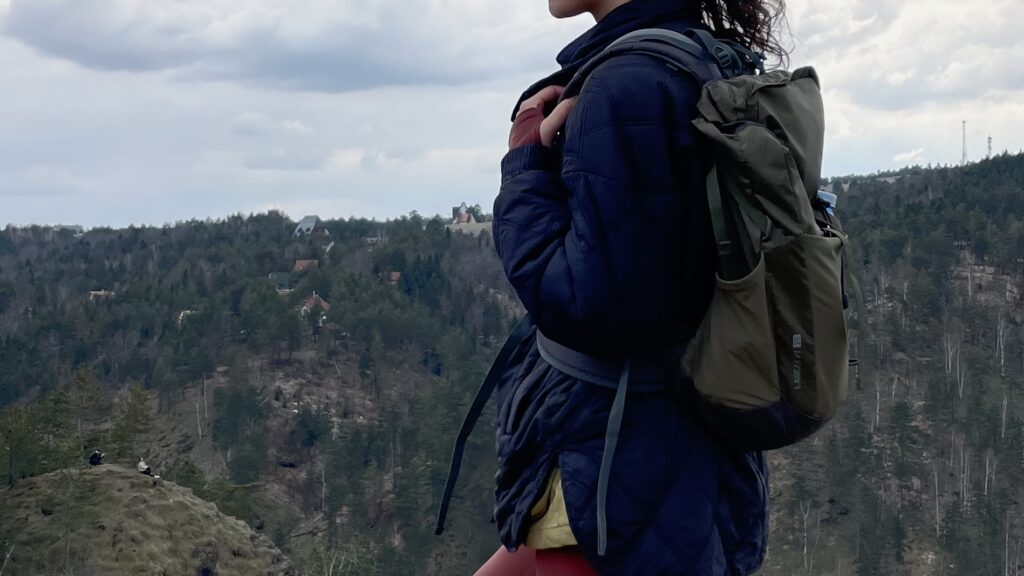
Size matters more than you think 😉
One of the first things I check is the hiking backpack size.
For most day hikes, somewhere between 20 and 30 litres is more than enough.
It gives me enough room for:
- water
- snacks
- an extra layer
- rain jacket
- first aid kit
- power bank
- dog essentials
- camera if I’m bringing one
A backpack that’s too small quickly becomes frustrating, while one that’s too large often encourages you to pack things you don’t really need, which means you will be “heavier” which is not recommended when going uphill.
Personally, I prefer having just enough space rather than carrying empty volume.
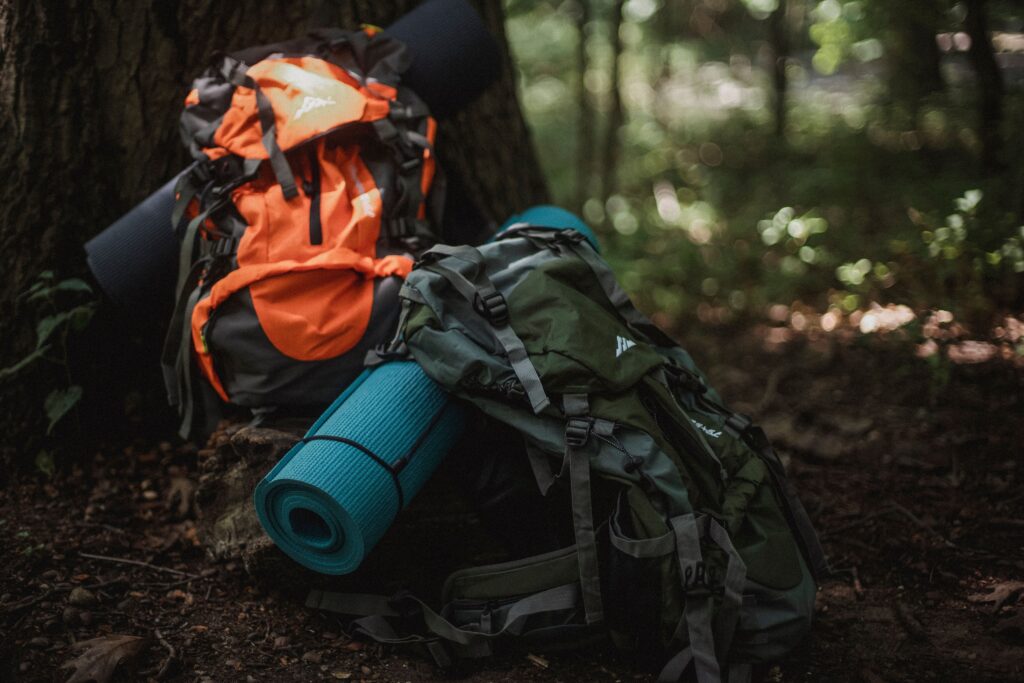
The hiking backpack features I never compromise on
I’ve realised there are only a handful of hiking backpack features that truly matter to me.
Comfort comes first
If shoulder straps don’t feel comfortable in the shop, they won’t magically become comfortable after five hours on a trail.
A breathable back panel
I hike throughout the year, including summer, and a ventilated back makes a noticeable difference.
Easy-to-reach side pockets
I don’t want to stop every time I need water.
A chest strap
It helps distribute the weight and keeps the backpack stable, especially on uneven terrain.
Quality over clever features
I’d rather have fewer well-designed pockets than twenty tiny compartments I’ll never use.
Simple usually wins.
What I don’t really care about
Over time, I’ve also learned that some features sound much more important than they actually are.
I rarely choose a backpack because it has ten extra attachment points or dozens of hidden pockets.
For the kind of hiking I enjoy, simplicity makes packing easier.
I also don’t mind if a backpack isn’t the lightest model on the market. Saving a few hundred grams has never mattered as much to me as having a backpack that feels comfortable from the first kilometre to the last.
Don’t forget about the fit
This is probably the most overlooked tip.
A backpack can have incredible reviews and still not feel right on your body. Whenever possible, try it on before buying. Adjust the shoulder straps, fasten the chest strap, walk around the store and imagine carrying it for several hours. If it already feels awkward, trust that feeling.
Comfort is personal, and no review can tell you exactly how a backpack will fit your body.
Final thoughts
Finding the right hiking backpack isn’t about chasing the newest model or the biggest brand.
It’s about understanding how you hike and choosing something that supports that experience instead of getting in the way.
For me, comfort, the right size and a simple, practical design will always matter more than having every possible feature.
At the end of the day, the best backpack is the one that makes you forget you’re wearing it.
The backpack I use
Unfortunately, the backpack I use is no longer available (or I cannot find it). But that only tells you that investment in a good backpack is a smart choice. My model is McKinley LASCAR VT 20. I like it because it is lightweight, very comfortable – good soft and wide shoulder straps, a chest straps.
It also has just enough useful pockets. Side pockets of course, but also external and hidden internal pockets on the top that are very useful for little things like your keys, wallet, lip balm, gums, you name it.
There is a little jam on the bottom – a folded cover up in case of a rain. Last but not least – it is pretty dark green color. 🙂
As I cannot link this exact backpack, I found some pretty similar alternatives for you:
- McKinley MINAH VT 18 Backpack
- Salomon TRAILBLAZER 20 Versatile Hiking Pack – it comes in three colors, which is handy. Still, I would never choose a white one.
- Salomon TRAILBLAZER 30 Versatile Hiking Pack – same as previous one, but a larger option.
The goal isn’t to own the most technical backpack on the trail. It’s to have one that quietly does its job while you focus on everything around you.
Keep reading
How to Start Hiking Even If You Don’t Have Anyone to Go With
Taking your first hike can feel intimidating, but it doesn’t have to. Here’s how to build confidence and enjoy hiking on your own.
7 Mistakes Every Beginner Hiker Makes (And How to Avoid Them)
Learn the most common beginner mistakes before you hit the trail and make your next hike more enjoyable.
What to Pack for a Day Hike: My Complete Checklist
A practical packing list with everything I actually bring on most of my hikes—from the essentials to a few items that make a big difference.
Dog Hiking Checklist: Everything I Pack Before Every Trail
If your four-legged friend joins you on adventures, this checklist covers everything I never leave home without.